


Completely customized according to different customer needs
Contact UsWelcome County Party Secretary Zong Guoming to guide the work of Kechuang New Materials
On the morning of June 23, Zong Guoming, Secretary of the County Party Committee, led the heads of relevant departments including the Development and Reform Commission, the Natural Resources Bureau, the Science and Technology Bureau, the Statistics Bureau, and the Supervision and Inspection Bureau to conduct on-site office work in the Luoxin Industrial Cluster Zone, including several enterprises such as Kechuang New Materials, to coordinate and resolve the difficulties and problems encountered in the development of the industrial zone. County leaders Zhang Chaofeng and Jiang Zhiguo also participated in the activity.

Congratulations to Ke Xin New Materials for successfully passing the three-system certification
Recently, under the leadership of Nan Xiaomin, the head of the company's quality inspection department, and with the concerted efforts of relevant colleagues, Kechuang New Materials successfully passed the three-system certification (quality management system, environmental management system, occupational health and safety management system). The certification scope includes breathable bricks, water-mouth bricks, furnace lids, skateboards and other refractory materials, as well as their production, sales and services.
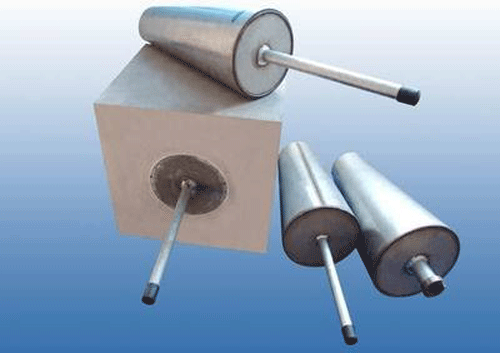
Methods to improve the service life of permeable bricks
As a refractory material, permeable bricks play a vital role in the steelmaking process. With increased usage, the wear and tear on these bricks becomes increasingly severe. Therefore, extending the service life of permeable bricks can, to a certain extent, increase steel production. Key methods include asymmetric bottom blowing, replacing the permeable core, controlling the bottom blowing parameters, and maintenance.
Four main reasons for damage to steel ladle porous bricks
During the use of porous bricks in steel plants, the main reasons for the damage of porous bricks are thermal stress, mechanical stress, mechanical wear, and chemical corrosion.

Refractory materials are widely used in various industrial sectors, including metallurgy, chemical processing, petrochemicals, machinery manufacturing, and power generation, with significant consumption in the metallurgical industry. In steelmaking, commonly used refractory materials include permeable bricks, water-cooled bricks, electric furnace lids, castables, runner brick, and magnesia-carbon bricks for steel ladles and refining furnaces. These refractory materials vary significantly in their main and additive components. From a chemical perspective, refractory materials are composed of minerals such as corundum, mullite, and magnesia, with major components including alumina and magnesia.
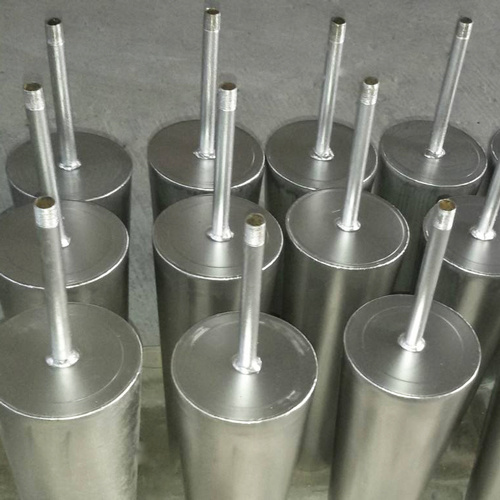
Precautions for using seepage-proof breathable bricks
Ladle refining has become an important part of modern steelmaking processes. Argon bottom blowing in the ladle is another crucial step in ladle refining, and the ladle permeable brick is the key component for this process, which is of particular concern to steelmakers. A good permeable brick should have a long service life, good bottom blowing effect, require little or no purging, and be safe and reliable. Currently, permeable bricks are mainly of the slit type and the anti-seepage type. The width and distribution of the slits in the slit-type permeable brick must be reasonably designed according to the ladle capacity, the steel grade being smelted, and the required permeability, so its production process is relatively complex; the anti-seepage type permeable brick produces a large number of irregularly distributed interconnected pores by controlling the particle size ratio of the materials, and its production process is relatively simple.



Whatsapp:15197927236
Fax:+86-379-62117605
Email:yangsp8743@163.com
Add:No. 2 Sanchuan Road, Luoxin Park, Economic and Technological Development Zone, Xin'an County, Luoyang City, Henan Province
©2025 Luoyang Kechuang New Material Co., Ltd This website supports IPv6 Privacy Policy www.300.cn SEO