


Completely customized according to different customer needs
Contact Us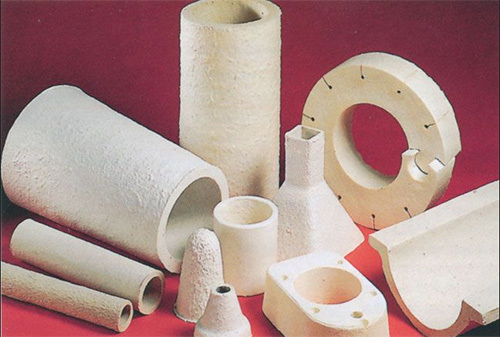
Using perforated bricks as an example, briefly describe the basic knowledge of refractory materials
For steelmakers and the refractory industry, permeable bricks are very important and common refractory products; taking permeable bricks as an example, this article discusses the basic knowledge of refractory materials from four aspects: thermal conductivity, specific heat capacity, refractoriness, and load softening temperature.
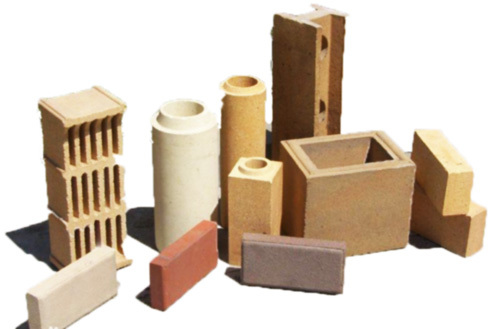
Ke Xin Chuang Cai breathable bricks tell the story of refractory materials classification
Refractory materials are a class of inorganic non-metallic materials with a refractoriness (also known as melting point) of not less than 1580℃. Refractoriness is a technical indicator that comprehensively considers the material's chemical composition, dispersion, proportion of liquid phase, and viscosity. However, defining refractory materials solely based on refractoriness is not comprehensive enough, as 1580℃ is not absolute. The current concept is defined as materials whose physical and chemical properties are permissible for use in high-temperature environments.
For steelmakers and the refractory industry, porous bricks are very important and common refractory products; using porous bricks as an example, this article discusses some basic knowledge of refractory materials from three aspects: porosity, permeability, and thermal expansion.
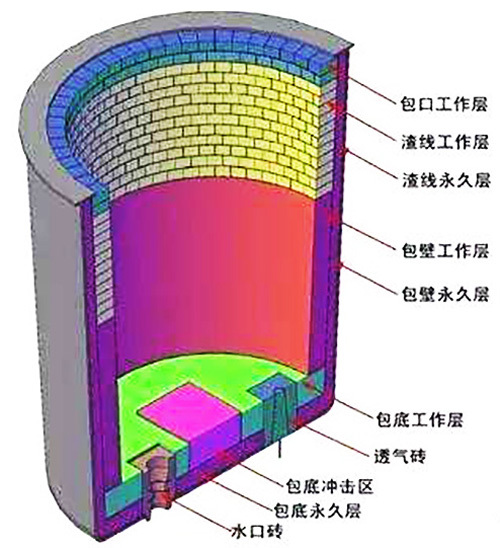
The function of the ladle lining is to protect the ladle shell metal structure from the high temperature of the molten steel, and to allow the molten steel to stay in the ladle for a certain period of time, so as to adjust the temperature of the molten steel, fine-tune and homogenize the chemical composition, and remove metallic inclusions and harmful gases from the molten steel.
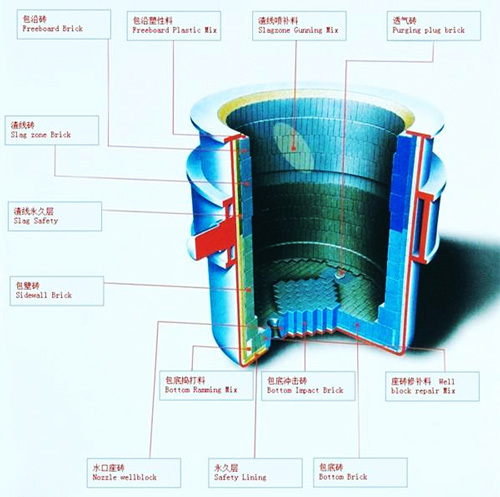
Air permeable brick usage scenarios - Refractory materials for steel ladle linings
Steel ladles, also known as steel ladles, steel buckets, and large ladles, are important thermal equipment in steel mills. They are mainly composed of a shell, a refractory lining, and a sliding nozzle mechanism. Steel ladles are used for refining steel and other processes. The condition of the steel ladle lining directly affects steel production, and it is necessary to reduce refractory material consumption and cost per ton of steel and improve the thermal turnover rate.

Refractory materials refer to a class of inorganic non-metallic materials with a refractoriness not lower than 1580℃. Refractory materials are widely used in metallurgy, chemical industry, petroleum, machinery manufacturing, silicate, and power industries, with the largest amount used in the metallurgical industry, accounting for more than half of the total output.



Whatsapp:15197927236
Fax:+86-379-62117605
Email:yangsp8743@163.com
Add:No. 2 Sanchuan Road, Luoxin Park, Economic and Technological Development Zone, Xin'an County, Luoyang City, Henan Province
©2025 Luoyang Kechuang New Material Co., Ltd This website supports IPv6 Privacy Policy www.300.cn SEO