

Completely customized according to different customer needs
Contact Us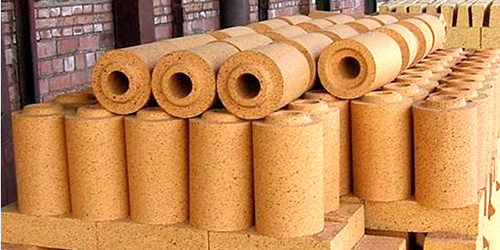
Brief Analysis of the Operation of Refractory Materials Industry in the First Half of 2016
I. Overall Operation of National Large-Scale IndustriesIn June 2016, the added value of large-scale industries increased by 6.2% year-on-year, 0.2 percentage points faster than in May. From a month-on-month perspective, the added value of large-scale industries increased by 0.47% in June. In the first six months of the year, the added value of large-scale industries increased by 6.0% year-on-year.1. In the first six months of the year, large-scale industrial enterprises achieved 52.84 trillion yuan in main business revenue, an increase of 3.1% year-on-year; the main business cost was 45.33 trillion yuan, an increase of 3%; the profit margin of main business revenue in the first six months was 5.68%. Scale
Production and operation of refractory materials industry in the first half of 2016
Refractory materials production situation from January to June. Compared with the same period last year, the national refractory materials output was 10.5746 million tons, a decrease of 5.71%. Among them, the output of dense shaped refractory products was 6.9763 million tons, a decrease of 2.02%; the output of thermal insulation refractory products was 0.2591 million tons, an increase of 15.09%; the output of unshaped refractory products was 3.3392 million tons, a decrease of 13.69%. Import and export trade of refractory raw materials from January to June. The total import and export trade value of refractory raw materials nationwide was US\$1.377 billion, a decrease of 14.04% year-on-year. Among them, the export trade value was US\$1.287 billion, a decrease of
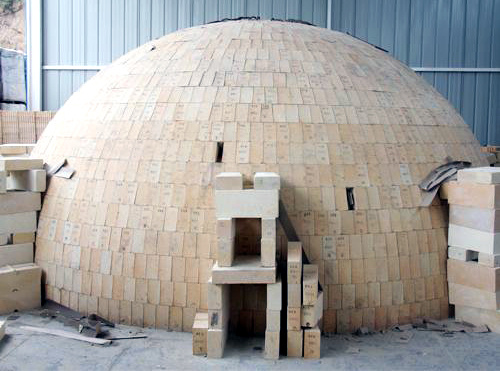
Recently, Luoyang City issued the "Implementation Plan for Constructing a Modern Industrial System and Promoting the Development of the New Materials Industry." Luoyang City will give full play to its resource advantages, industrial foundation advantages, and scientific research and innovation advantages, focusing on breakthroughs in key core technologies, cultivating competitive products, and promoting the high-end and clustered development of the new materials industry, making Luoyang a national high-tech industrial base for new materials with distinct industrial characteristics, a good development environment, a complete industrial chain and supporting facilities, and strong comprehensive competitiveness. Forming 4 to 5 industrial clusters exceeding 10 billion yuan. Luoyang's materials industry has a strong foundation. Starting from the launch of China's first artificial earth satellite, Dongfanghong 1, in 1970...
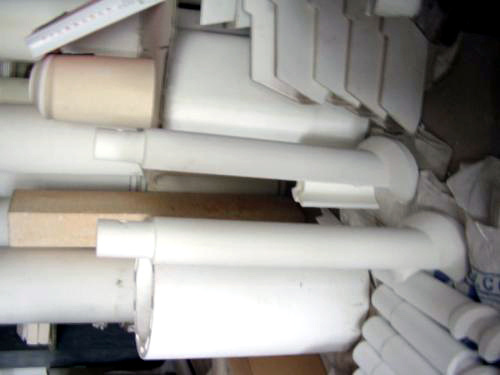
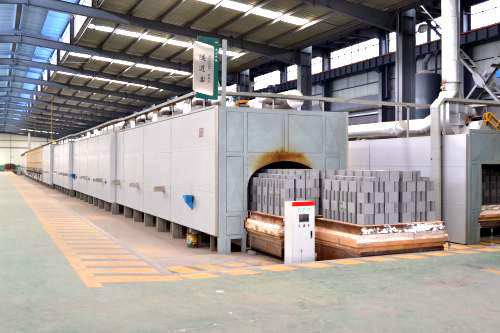
The State Council recently issued the "Guiding Opinions on Promoting Steady Growth, Structural Adjustment, and Efficiency Improvement in the Building Materials Industry", which makes specific arrangements for resolving overcapacity in the cement and flat glass industries in the coming period, accelerating the transformation and upgrading of the building materials industry, and promoting cost reduction and efficiency improvement for building materials enterprises to achieve development out of difficulties. The "Opinions" propose that in order to reduce costs and increase efficiency, the building materials industry should implement green and intelligent development, one of which is to promote chromium-free refractory materials. In the cement kiln burning zone, magnesia-chromium bricks are commonly used as lining materials, but under high temperature, alkaline, and oxidizing atmospheres, Cr3+ in magnesia-chromium bricks will be converted into water-soluble Cr6+, and Cr6+ is strongly harmful
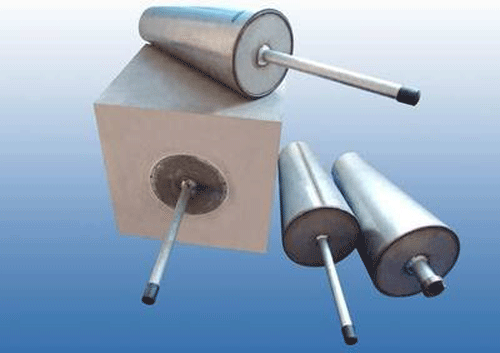
Methods to improve the service life of permeable bricks
As a refractory material, permeable bricks play a vital role in the steelmaking process. With increased usage, the wear and tear on these bricks becomes increasingly severe. Therefore, extending the service life of permeable bricks can, to a certain extent, increase steel production. Key methods include asymmetric bottom blowing, replacing the permeable core, controlling the bottom blowing parameters, and maintenance.
Four main reasons for damage to steel ladle porous bricks
During the use of porous bricks in steel plants, the main reasons for the damage of porous bricks are thermal stress, mechanical stress, mechanical wear, and chemical corrosion.



Whatsapp:15197927236
Fax:+86-379-62117605
Email:yangsp8743@163.com
Add:No. 2 Sanchuan Road, Luoxin Park, Economic and Technological Development Zone, Xin'an County, Luoyang City, Henan Province
©2025 Luoyang Kechuang New Material Co., Ltd This website supports IPv6 Privacy Policy www.300.cn SEO