

Completely customized according to different customer needs
Contact UsThe Beauty of Metal: Exploring the Manufacturing of Metal Materials
The Beauty of Metal: Exploring the Manufacturing of Metal Materials In today's industrial field, metal materials have always played a vital role. Their versatility and plasticity have led to their widespread use in fields such as construction, manufacturing, and art. Low-temperature breathable bricks are a unique type of metal material; they not only have characteristics such as high temperature resistance and heat insulation but also play an important role in building materials. Low-temperature breathable bricks, as the name suggests, are metal materials with breathable properties at low temperatures. Their manufacturing process is very complex and requires multiple processes to complete. First, the metal raw materials are heated to a certain temperature through a special process, then molded using a mold, and finally subjected to high-temperature treatment to give them breathable properties. This manufacturing method not only ensures product quality but also improves its performance in practical applications. Low-temperature breathable bricks have wide applications in the construction field, especially in high-temperature environments, where their breathable properties can effectively reduce moisture inside buildings and maintain fresh indoor air. At the same time, their high-temperature resistance also makes them an important isolation material in the event of a fire, providing safety for buildings. The beauty of metal materials lies not only in their appearance but also in the manufacturing process behind them. Low-temperature breathable bricks are...
Hearthstone: the inheritance of craftsmanship in ovens, furnaces, and electric furnaces
Mastering the Fire: The Legacy of Kilns, Furnaces, and Electric Furnaces In ancient crafts, fire is one of the most crucial elements. The craftsmanship of kilns, furnaces, and electric furnaces has a long history, carrying with it many cultural and technical traditions. Among them, low-temperature permeable bricks, as key materials, play an important role in these processes. Let's explore the essence of these fire-related traditions! In the journey of craft inheritance, the kiln is an indispensable link. It uses fire as its core, heating objects by placing them under a heat source to achieve drying or heating purposes. In this process, the role of low-temperature permeable bricks is particularly important. This special brick is light and breathable, effectively retaining heat, enabling even temperature distribution in the kiln for optimal results. Compared with kilns, furnaces are more mysterious and challenging. They are essential tools for making metals, glass, and other items, requiring high temperatures and special materials to melt substances. In this process, the characteristics of low-temperature permeable bricks are fully demonstrated. They can not only withstand high temperatures but also effectively prevent heat loss, ensuring the stability and longevity of the furnace's internal temperature. With the development of technology, electric furnaces have gradually replaced traditional fire-based crafts. Electric furnaces use electricity as a heat source, offering high efficiency and...
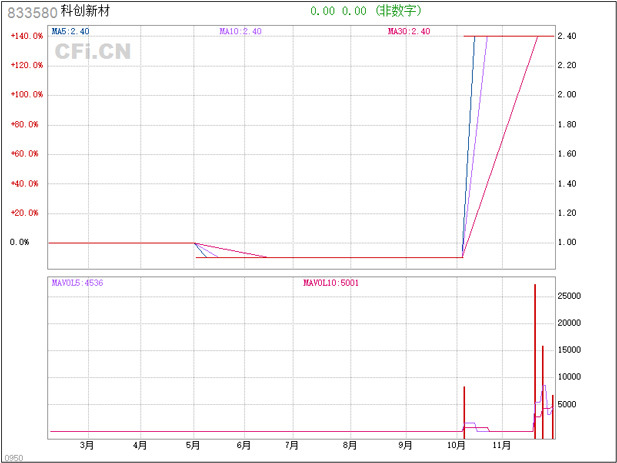
On November 27, it was reported that Wei Wenxu (Chairman), a shareholder of Kechuang New Materials, reduced his holdings by 1.585 million shares through an after-hours agreement transfer on the NEEQ on November 25, resulting in a post-change shareholding ratio of 41.49%. As of the signing date of this report, the relevant information on this equity change has been truthfully disclosed in accordance with relevant regulations, and there is no other material information that should be disclosed by the information discloser but has not been disclosed in accordance with laws and regulations. NEEQ data shows that Kechuang New Materials' main business is the research, development, production and sales of refractory materials, with main products including bottom-blown argon permeable elements (permeable bricks) for steel ladles,
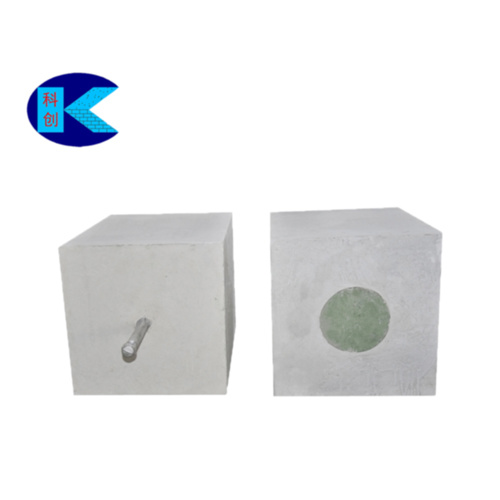
Air permeable brick professional manufacturer - Kechuang New Materials
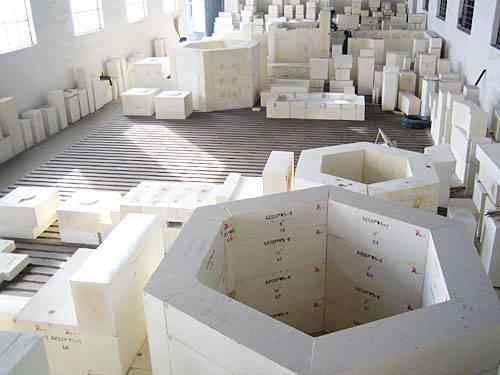
Luoyang Kechuang New Materials Co., Ltd. (hereinafter referred to as Kechuang New Materials) is a professional permeable brick manufacturer and a modern private enterprise that integrates the research and development, production, sales, and application of refractory materials. Established in 2002, the company has adhered to the tenet of "scientific and technological innovation" throughout its development process, upholding the principles of "survival through quality, efficiency through management, and development through science and technology." It embraces the business philosophy of "integrity as the foundation, trust as the principle, pragmatic innovation, cooperation and progress, and shared value," and relentlessly pursues "integrity, quality, and value" as its corporate goals, continuously improving its management level and product quality. Below are three Kechuang New Materials factories
Analysis of the Development Trend of the Refractory Materials Industry in 2017
New materials are the pioneers and pillars of high-tech industries and advanced manufacturing industries, and are one of the frontier fields where technological innovation is relatively active. Currently, due to the use of non-fire-resistant materials for the outer layer of cables inside most buildings, this has fueled the occurrence of fires, causing significant property damage and casualties. Refractory materials are used in metallurgy, chemical industry, petroleum, machinery manufacturing, silicate, and power industries. The metallurgical industry uses a large amount, accounting for 50% to 60% of the total output. 2017 was destined to be an extraordinary year for refractory materials companies. Changes in the economic landscape have had a significant impact on the refractory materials industry. Below...
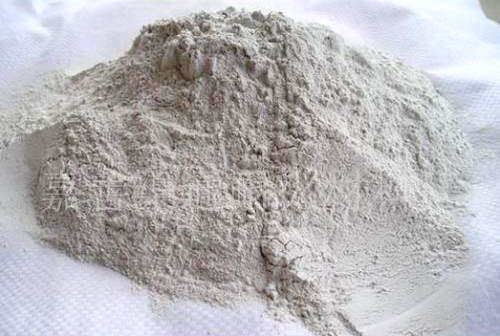
The 13th Five-Year Plan points out the direction for the development of refractory materials
The Ministry of Industry and Information Technology has learned that the "Building Materials Industry Development Plan" has been released. The Plan proposes that the "13th Five-Year Plan" will expand the emerging building materials industry and launch an advanced inorganic non-metallic materials cultivation action. Among them, the traditional building materials upgrading and transformation action specifically proposes that the refractory materials industry will promote chromium-free refractory materials, erosion-resistant and heat-insulating integrated, long-life new refractory materials with integrated structure and function, microporous high-efficiency thermal insulation materials, and monolithic refractory materials. The regional characteristic industry cultivation action mentions that Shanxi will build a basalt fiber and refractory materials industrial base; Inner Mongolia will leverage its graphite resource advantages to develop graphite deep processing; Liaoning...



Whatsapp:15197927236
Fax:+86-379-62117605
Email:yangsp8743@163.com
Add:No. 2 Sanchuan Road, Luoxin Park, Economic and Technological Development Zone, Xin'an County, Luoyang City, Henan Province
©2025 Luoyang Kechuang New Material Co., Ltd This website supports IPv6 Privacy Policy www.300.cn SEO