

Completely customized according to different customer needs
Contact Us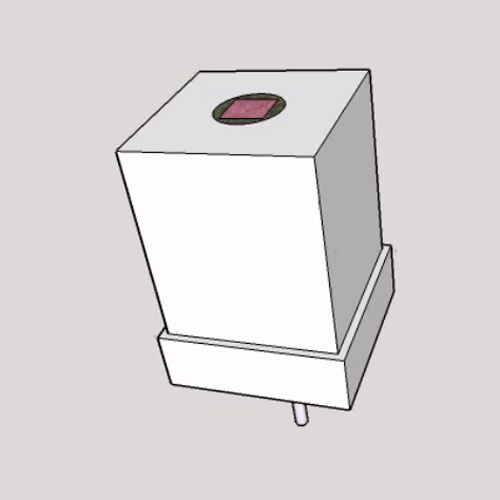
The performance of anti-seepage aerated bricks
炉外精炼工艺如今是炼钢流程的重要组成部分,钢包底吹氩工序是又实现炉外精炼不可少的,而钢包透气砖则是实现这一工艺的关键元件。目前的透气砖主要有狭缝、防渗型两种,透气砖的性能关乎着钢铁的质量和产量,一般来说,透气砖在寿命、底吹效果、吹扫力度和安全度上都应当契合炼钢厂家生产的日常周转。 (图)防渗透气砖在使用寿命、底吹效果和安全可靠性上,防渗透气砖与狭缝型透气砖相比,防渗透气砖有着透气性能稳定的优势,可
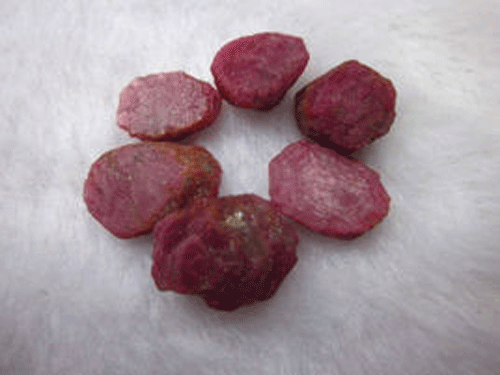
Main components of refractory materials such as permeable bricks, water-mouth bricks, and castables
Refractory materials are used in various industrial sectors including metallurgy, chemical processes, petrochemicals, mechanical manufacturing, and power processing, with a significant portion used in the metallurgical industry. In steelmaking, common refractory materials used in converters and refining furnaces include permeable bricks, water-cooled bricks, electric furnace covers, castables, runner brick, and magnesia-carbon bricks. These refractory materials differ significantly in their main and additive components. From a chemical perspective, refractory materials are composed of minerals such as corundum, mullite, and magnesia, with main components including alumina and magnesia. (Figure) Corundum is a major component of refractory materials, forming the refractory...
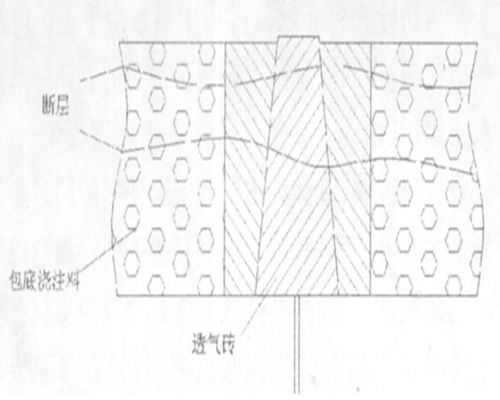
Four main reasons for damage to steel ladle breathable bricks
During the use of porous bricks in steel plants, the main reasons for damage to the porous bricks are thermal stress, mechanical stress, mechanical wear, and chemical corrosion. Porous bricks consist of two parts: a porous core and a porous seat brick. When bottom blowing gas is used, the working surface of the porous core will directly contact the high-temperature molten steel. The bottom blowing gas is a cold air stream, forming a large temperature difference with the high-temperature molten steel. As the number of uses increases, due to the rapid cooling and heating, the erosion of the porous brick core becomes deeper, and cracks are easily produced. The working surface of the bottom porous brick is in direct contact with the high-temperature molten steel, while the temperature of the non-working surface is relatively low.
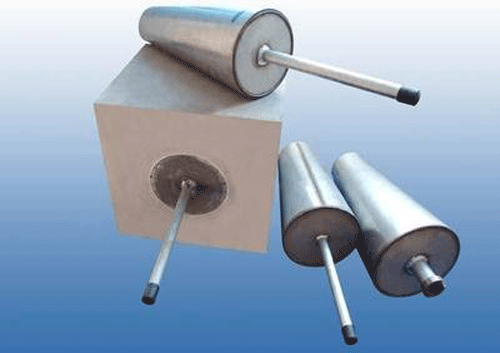
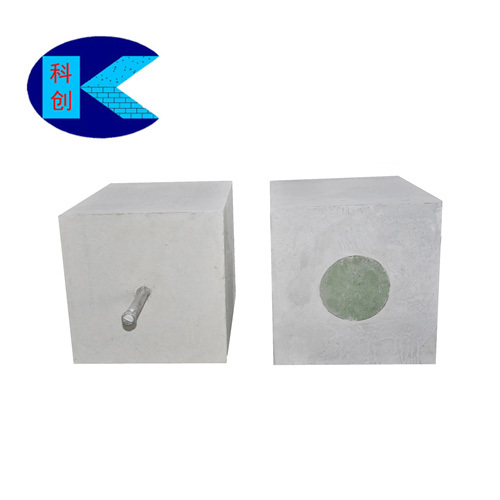
Air permeable bricks are key equipment in the converter blowing process. There are many types, among which the split-type air permeable brick includes two parts: the air permeable core and the base brick. From its development, in order to protect the core air supply components, manufacturers generally equip it with a base brick, and there may be other components, such as cushion bricks. The construction of the air supply component air permeable brick refers to the construction of this set of combined bricks, including the air permeable core and base brick, etc., on the furnace bottom. The service life of the air permeable brick is related to its own structural characteristics, bottom blowing pressure, material composition, operation process, etc., as well as its construction quality. (Figure) In the actual production of steelmaking plants, due to the use of air permeable cores, the surrounding refractory...
Methods to improve the lifespan of permeable bricks
As a refractory material, permeable bricks play a vital role in the steelmaking process. With increased use, the wear and tear on permeable bricks becomes increasingly severe. Therefore, extending the service life of permeable bricks can, to a certain extent, increase steel production. The main methods include asymmetric bottom blowing, replacing the permeable core, controlling reasonable bottom blowing parameters, and maintenance. (Figure) In the asymmetric bottom blowing method using split permeable bricks, two sets of permeable bricks work alternately during production. Generally speaking, when both sets of permeable bricks are fully utilized, the ladle life can be significantly extended. Moreover, the permeable brick's high flow rate is not a problem unless the ladle is exceptionally large.
Factors Affecting the Performance of Argon-Blowing Permeability Bricks in Steel Ladles
The quality of bottom-blown argon permeable bricks in steel ladles is crucial for steelmakers. During use, unfavorable factors should be avoided or addressed. Factors affecting the effectiveness of bottom-blown argon permeable bricks include steel penetration of the permeable brick working surface, blockage of permeable bricks (slit type) by slag, material changes, fluctuations in gas source pressure, and long ladle downtime. Permeable bricks operate under harsh conditions. In large ladles, the hydrostatic pressure of molten steel is high, and the required stirring intensity is also high. Therefore, the key to ensuring gas permeability is that the permeable bricks have strong anti-steel penetration capabilities. In the production practice of steel mills, the working surface of permeable bricks often becomes coated with steel, thus requiring...



Whatsapp:15197927236
Fax:+86-379-62117605
Email:yangsp8743@163.com
Add:No. 2 Sanchuan Road, Luoxin Park, Economic and Technological Development Zone, Xin'an County, Luoyang City, Henan Province
©2025 Luoyang Kechuang New Material Co., Ltd This website supports IPv6 Privacy Policy www.300.cn SEO