

Completely customized according to different customer needs
Contact Us
Factors Affecting the Performance of Argon-Blowing Permeability Bricks in Steel Ladles
The quality of bottom-blown argon permeable bricks in steel ladles is crucial for steelmakers. During use, unfavorable factors should be avoided or addressed. Factors affecting the effectiveness of bottom-blown argon permeable bricks include steel penetration of the permeable brick working surface, blockage of permeable bricks (slit type) by slag, material changes, fluctuations in gas source pressure, and long ladle downtime. Permeable bricks operate under harsh conditions. In large ladles, the hydrostatic pressure of molten steel is high, and the required stirring intensity is also high. Therefore, the key to ensuring gas permeability is that the permeable bricks have strong anti-steel penetration capabilities. In the production practice of steel mills, the working surface of permeable bricks often becomes coated with steel, thus requiring...
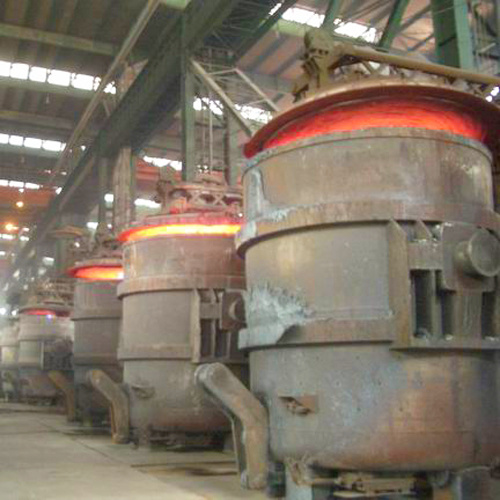
Working environment of argon permeable bricks for bottom blowing in steel ladles
In the steelmaking process, the bottom-blowing argon process using porous plugs in the ladle is crucial. The function of the bottom-blowing argon porous plug is to stir the molten steel through bottom-blowing argon gas, allowing the molten steel to circulate and achieve the purpose of adjusting the molten steel composition and removing inclusions. Therefore, the permeability of the ladle porous plug has a significant impact on the secondary refining. If the permeability is poor or insufficient, the molten steel refining process cannot be completed. Conversely, excessive permeability will affect the service life of other refractory materials in the ladle lining.
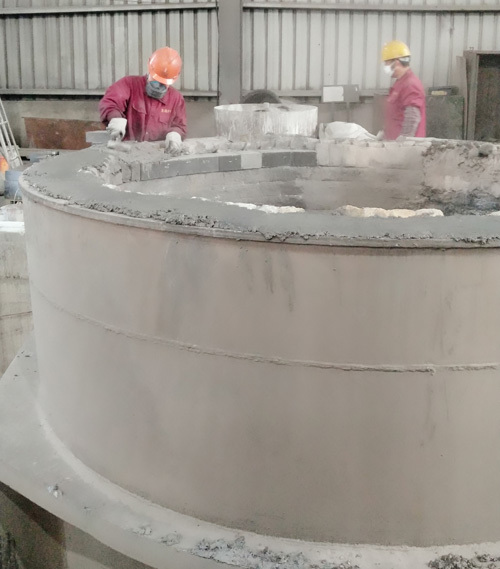
Construction of overall breathable bricks and water-mouth bricks for steel ladles
The quality of ladle lining directly impacts the service life of the permeable bricks and water-mouth bricks, and may also affect the quality of the finished steel. Before lining, the existing refractory lining of the ladle needs to be removed. Before dismantling, adequate preparation is necessary. Firstly, carefully inspect the thickness of the ladle wall, bottom, water-mouth bricks, and permeable bricks, checking for any large gaps. Before entering the ladle, check the upper part of the ladle for any hanging or loose steel slag and address it accordingly to prevent injury from falling slag during operation.
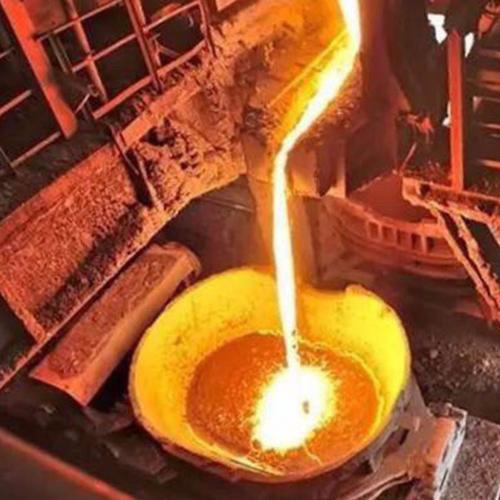
Several factors affecting the use of steel ladle linings
Refractory materials used for steel ladle linings include porous bricks, water-mouth bricks, magnesia-carbon bricks, castables, etc. In addition to the influence of the ladle lining materials themselves, certain factors during use will accelerate their consumption, leading to a reduction in service life. (Figure) The temperature of the steel ladle pouring molten steel: To be precise, it should be the temperature of the molten steel in the steel ladle. The higher the temperature, the faster the dissolution and corrosion, and the shorter the service life. The steel ladle will go through baking, steel tapping, refining, and continuous casting processes, during which the temperature of the steel ladle fluctuates greatly, causing significant stress on the refractory lining.

The reason why argon-blown permeable brick ladles are used for continuous casting after refining
After the molten steel in the ladle is refined by argon blowing through porous bricks, it will be continuously cast. The role of continuous casting is to continuously cast the refined molten steel to produce steel products: qualified steel ingots or billets. The molten steel produced from the converter is transferred to the ladle, and after being refined by argon blowing through porous bricks, it will be cast into billets of the corresponding shape according to the steel plant's production process and requirements. The main equipment of the continuous casting section includes a turntable, intermediate vessel, crystallizer, cooling nozzle, flame cutter, etc.
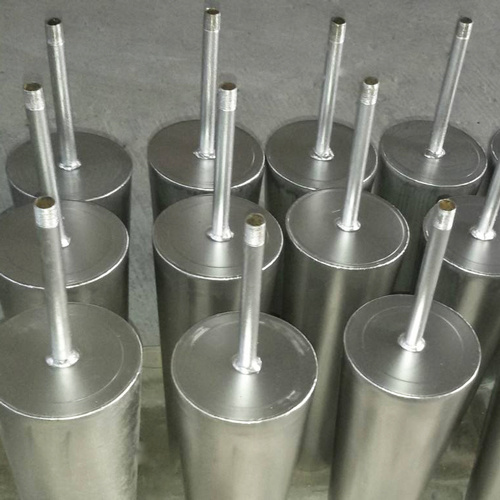
Precautions for using seepage-proof breathable bricks
Ladle refining has become an important part of modern steelmaking processes. Argon bottom blowing in the ladle is another crucial step in ladle refining, and the ladle permeable brick is the key component for this process, which is of particular concern to steelmakers. A good permeable brick should have a long service life, good bottom blowing effect, require little or no purging, and be safe and reliable. Currently, permeable bricks are mainly of the slit type and the anti-seepage type. The width and distribution of the slits in the slit-type permeable brick must be reasonably designed according to the ladle capacity, the steel grade being smelted, and the required permeability, so its production process is relatively complex; the anti-seepage type permeable brick produces a large number of irregularly distributed interconnected pores by controlling the particle size ratio of the materials, and its production process is relatively simple.



Whatsapp:15197927236
Fax:+86-379-62117605
Email:yangsp8743@163.com
Add:No. 2 Sanchuan Road, Luoxin Park, Economic and Technological Development Zone, Xin'an County, Luoyang City, Henan Province
©2025 Luoyang Kechuang New Material Co., Ltd This website supports IPv6 Privacy Policy www.300.cn SEO