

Completely customized according to different customer needs
Contact Us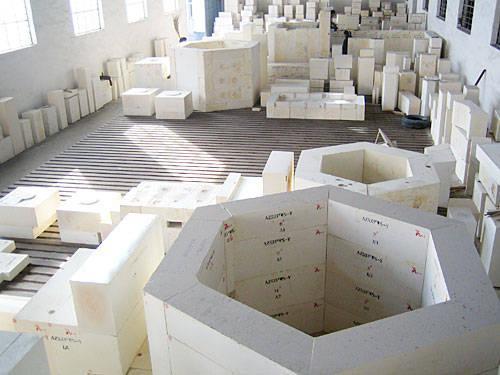
Analysis of the Development Trend of Refractory Materials Industry in 2017
New materials are the pioneers and pillars of high-tech industries and advanced manufacturing industries, and have always been one of the most active frontiers of technological innovation. Currently, due to the fact that most buildings use non-fire-resistant materials for the outer layer of internal cables, this has fueled the occurrence of fires, resulting in huge property losses and casualties. Fire-resistant materials are widely used in metallurgy, chemical industry, petroleum, machinery manufacturing, silicate, and power industries, with the largest amount used in the metallurgical industry, accounting for 50% to 60% of the total output. 2017 was destined to be an extraordinary year for refractory materials companies. Changes in the economic landscape have had an impact on the refractory materials industry.
The 13th Five-Year Plan points out the direction for the development of refractory materials
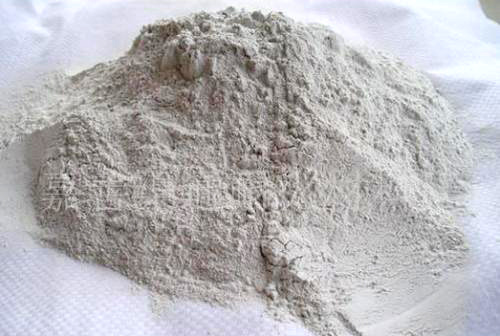
The Ministry of Industry and Information Technology has learned that the "Building Materials Industry Development Plan" has been released. The Plan proposes that the 13th Five-Year Plan will expand the emerging building materials industry and launch an advanced inorganic non-metallic materials cultivation action. Among them, the traditional building materials upgrading and transformation action, in particular, proposes that the refractory materials industry will promote chromium-free refractory materials, erosion-resistant and heat-insulating and heat-preserving integrated, structurally functional integrated long-life new refractory materials, microporous high-efficiency heat-insulating materials, and monolithic refractory materials. The regional characteristic industry cultivation action mentions that Shanxi will build a basalt fiber and refractory materials industrial base; Inner Mongolia will rely on its graphite resource advantages to develop stone...
I. Overall Operation of Large-Scale Industries Nationwide In June 2016, the added value of large-scale industries increased by 6.2% year-on-year, 0.2 percentage points faster than in May. Month-on-month, the added value of large-scale industries increased by 0.47% in June. From January to June, the added value of large-scale industries increased by 6.0% year-on-year. 1. From January to June, the main business income of large-scale industrial enterprises reached 52.84 trillion yuan, an increase of 3.1% year-on-year; the main business cost was 45.33 trillion yuan, an increase of 3%.
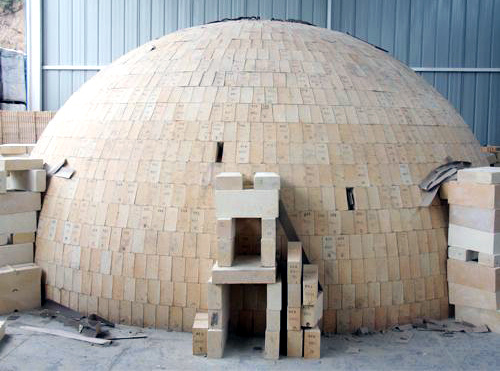
Production and Operation of Refractory Materials Industry in the First Half of 2016
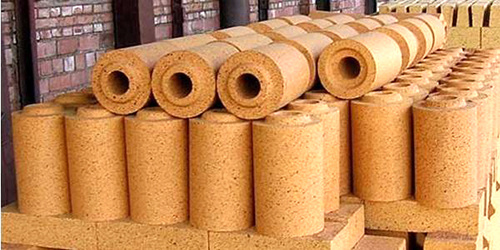
Refractory materials production: From January to June, compared with the same period last year, the national refractory materials output was 10.5746 million tons, a decrease of 5.71%. Among them, the output of dense shaped refractory products was 6.9763 million tons, a decrease of 2.02%; the output of heat preservation and insulation refractory products was 0.2591 million tons, an increase of 15.09%; the output of unshaped refractory products was 3.3392 million tons, a decrease of 13.69%. Import and export trade of refractory raw materials: From January to June, the total import and export trade volume of refractory raw materials nationwide was US$1.377 billion, a decrease of 14.04% compared with the same period last year.
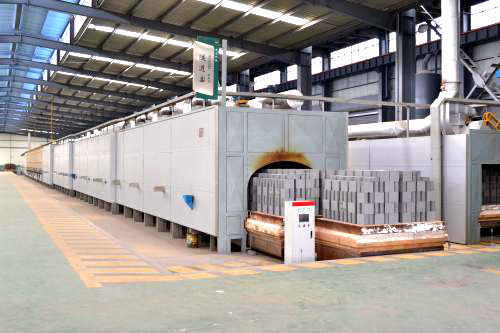
Recently, Luoyang City issued the "Implementation Plan for Building a Modern Industrial System and Promoting the Development of the New Materials Industry." Luoyang City will fully leverage its resource advantages, industrial foundation advantages, and scientific research and innovation advantages, focusing on breakthroughs in key core technologies and cultivating competitive products. It will promote the high-end and clustered development of the new materials industry, building Luoyang into a national high-tech industrial base for new materials with distinct industrial characteristics, a superior development environment, a complete industrial chain and supporting facilities, and strong comprehensive competitiveness. Forming 4 to 5 industrial clusters exceeding 10 billion yuan. Luoyang City has a strong materials industry. Since 1970, when China launched its first artificial earth satellite...
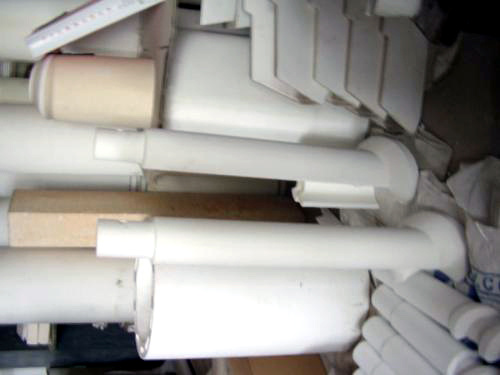
The State Council recently issued the "Guiding Opinions on Promoting Steady Growth, Structural Adjustment, and Efficiency Improvement in the Building Materials Industry", which makes specific arrangements for resolving overcapacity in the cement and flat glass industries in the coming period, accelerating the transformation and upgrading of the building materials industry, and promoting cost reduction and efficiency improvement for building materials enterprises to achieve development out of difficulties. The Opinions propose that to reduce costs and increase efficiency, the building materials industry should implement green and intelligent development, one measure of which is to promote the use of chromium-free refractory materials.



Whatsapp:15197927236
Fax:+86-379-62117605
Email:yangsp8743@163.com
Add:No. 2 Sanchuan Road, Luoxin Park, Economic and Technological Development Zone, Xin'an County, Luoyang City, Henan Province
©2025 Luoyang Kechuang New Material Co., Ltd This website supports IPv6 Privacy Policy www.300.cn SEO